PFAS are known as “forever chemicals” for a reason. They don’t break down easily. They stick around. And once they’re in our water, getting them out is a challenge.
And that challenge is getting harder to ignore.
In just about every jurisdiction, new rules are being put in place to limit the amount of PFAS permitted in our water.
Starting on August 16th, Quebec will require technical landfill sites to begin monitoring for PFAS compounds, giving a clearer picture of how widespread these chemicals are.
But monitoring the presence of these chemicals can only be one part of the equation. The bigger question is how do we get PFAS out of the water once it’s there.
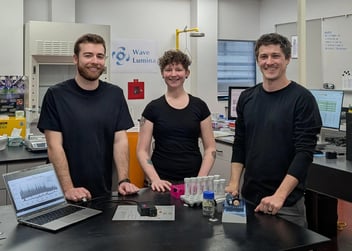
For Ihsen and Farah Ben Salah of the dynamic Sherbrooke-based company E2METRIX, the goal isn’t just to remove PFAS.
It’s to completely destroy them.
The Forever Chemicals Problem
PFAS stands for per- and polyfluoroalkyl substances. They are a large group of synthetic chemicals that were designed to resist water, oil and heat.
For decades, they have been used to make everyday products. They are found in cookware, cleaning products, cosmetics and even food packaging.
“As a result, they end up everywhere in the environment. They can be found in drinking water, in soil, in biosolids, and throughout the food chain. They are widespread. Unfortunately, they also have harmful effects on ecosystems and human health.” says Ihsen Ben Salah, General Manager of E2METRIX Canada.
And “forever” is more than just a nickname. The longer these chemicals remain in our environment, the more they spread and accumulate.
The Solution
So, how do you get rid of a chemical that doesn’t want to go away?
Farah Ben Salah, Laboratory Operations Manager at E2METRIX Canada, reminds us that the situation is more promising than it looks.
“We use multiple technologies to tackle PFAS, essentially forming a complete treatment train. We don’t just filter them out, we actually break down the molecules.”
Their patented process starts with OLift®, a vertical column where tiny bubbles are pushed through contaminated water. PFAS stick to the surface of those bubbles and rise to the top, forming a concentrated foam. This method is called foam fractionation.
“PFAS have surfactant properties, meaning they tend to accumulate at the air-water interface.”
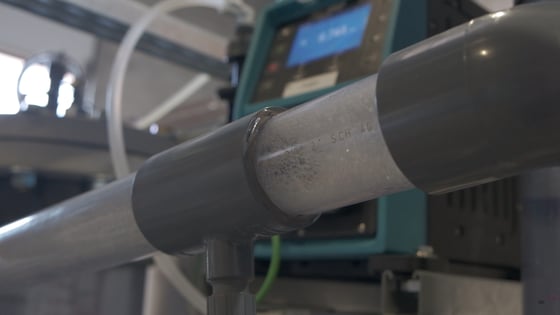
E2METRIX also uses ozone, a highly reactive gas, to make this step more effective.
“Ozone is a powerful oxidant, which helps improve treatment efficiency.”
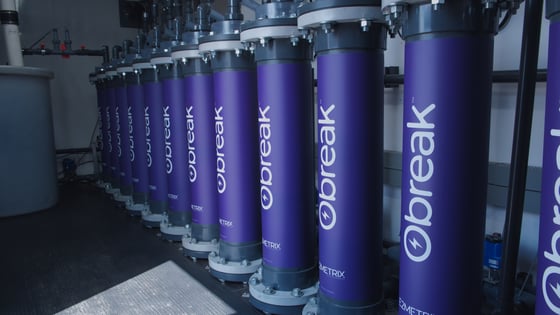
That concentrated foam, known as “foamate,” then goes into the Obreak® reactor, a specialized electro-oxidation system where an electrical current is run through the water.
This is where things get interesting. Obreak® breaks the strong carbon-fluorine bond that holds PFAS molecules together, leaving them in a form that is no longer harmful to the environment.
The water can then go through a final purification step to remove any remaining contaminants, depending on what’s left after treatment.
From Lab to Field
E2METRIX can eliminate up to 99.9% of regulated PFAS, allowing municipal and industrial clients to comply with the most stringent environmental and permitting regulations.
And the technology can go where it’s needed.
E2METRIX’s mobile treatment units can be brought directly to a site and installed where PFAS treatment is required. That means there’s no need to build an entirely new treatment facility before getting started.
“We’ve been active in the field with our first PFAS pilot in Alabama, and since then, we’ve delivered several pilot projects across North America.”, says Ihsen.
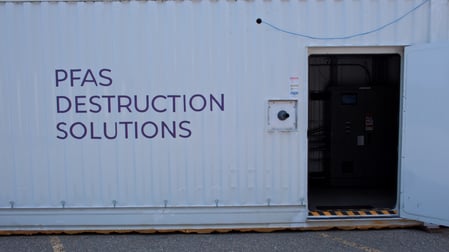
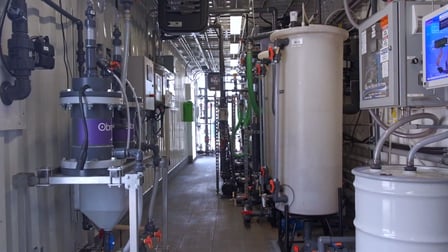
Now, their exciting PFAS treatment technology is coming back to Ihsen’s home province, as E2METRIX is preparing for its first PFAS pilot in Mauricie, Quebec.
A Way Forward
For E2METRIX, the next step is getting this technology where it can make a difference.
Through its network across the water sector, AquaAction has helped E2METRIX connect with potential clients, partners, and other key players who can help get the technology out into the field.
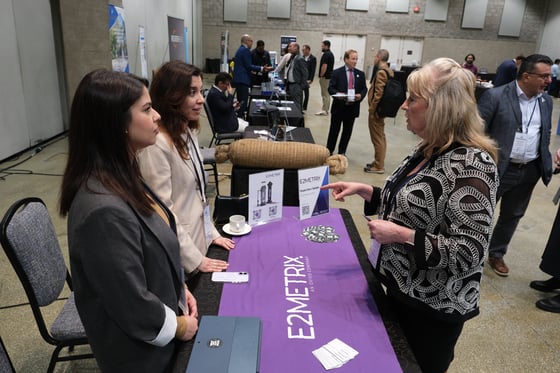
E2METRIX is backed by Ovivo, a global leader in water treatment and a long-standing partner of AquaAction. As an Ovivo company, E2METRIX benefits from deep industry expertise, technical resources, and a global network that help accelerate the development and deployment of innovative water solutions.
But for E2METRIX, the work goes beyond commercial growth. It always comes back to what’s at stake: protecting the water we depend on and the ecosystems and people connected to it.
As Ihsen Ben Salah puts it:
“Ultimately, we’re helping protect the health of future generations, water quality, and ecosystems. Anything impacted by the presence of PFAS, we’re working to protect it.”
For Farah Ben Salah, being able to do more than contain the problem gives her work meaning.
“Knowing that we’re destroying a harmful contaminant and completely removing it from the water is powerful. In a way, we’re giving life back to water and to living beings everywhere. For me personally, that gives me hope and motivates me to do this work every day.”
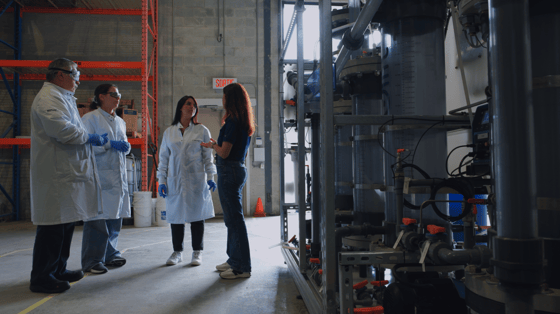
PFAS and forever chemicals have spent decades moving throughout water and soil. Breaking that cycle means giving our waters a chance to recover.
Because “forever chemicals” don’t have to mean forever pollution.
Learn more about E2METRIX here!