
AquaAction submits a three-point plan for Canada’s first National Water Security Strategy
Through our work with innovative water-tech entrepreneurs, AquaAction brings Canadian ideas into local communities to solve actual freshwater challenges from coast to coast. It's also how we hear about the real barriers our innovators hit along the way: difficulties finding a first customer, the shortage of skilled workers, policies that do too little to encourage efficiency and good water stewardship.
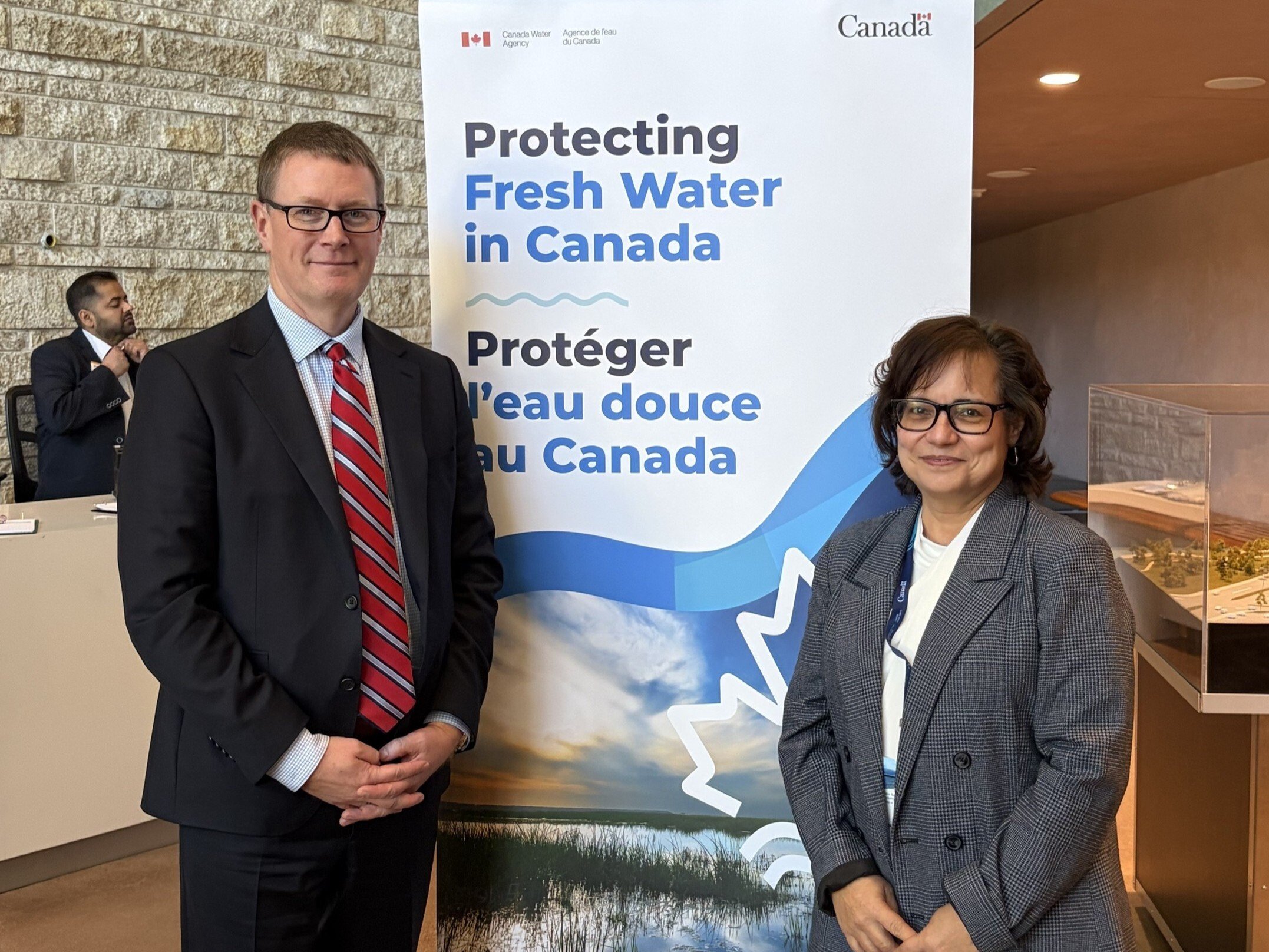
Mark Fisher, President Canada Water Agency and Soula Chronopoulos, President, AquaAction, at the National Water Security Strategy Consultations (October 2026).
AquaAction drew on this informed feedback for the presentation we made at the Canada Water Agency’s consultations in Winnipeg on October 19–20, 2026, and for our written submission for Canada’s first National Water Security Strategy, submitted on October 25, in which we called on the federal government to give entrepreneurs, water professionals and tomorrow’s leaders the support they need to protect Canada's freshwater.
Our recommendations drew on frank discussions with our extensive network of water-sector experts, government representatives and partners, including two townhalls with our entrepreneurs, alongside a national survey involving 1,239 Canadians on their current attitudes toward freshwater and national security.
Our three-point plan:
1. Help Canadian water innovations reach the communities that need them.
- AquaAction's leading recommendation to the federal government is to fulfill their election platform commitments to establish a $100 million Water Security Technology Fund and a Municipal Stream under the Freshwater Action Plan.
- The Water Security Technology Fund would help Canadian entrepreneurs bring water technologies to market, while the Municipal Stream would help municipalities and First Nations test and adopt those solutions.
- Together, these investments would strengthen water security, grow Canadian businesses and create skilled jobs.
2. Build the workforce needed to protect and manage our water.
- AquaAction also recommended connecting freshwater education, including efforts to grow public awareness of careers in the water sector, with training that specifically addresses workforce shortages in this field.
- Workforce development is crucial to effectively create a water-secure nation and Build Canada Strong.
- There is a “silver tsunami” coming, an impending mass retirement that will leave a vacuum in the workforce, amplifying the need for tens of thousands of new people to join the water sector.
- From hydropower engineers to drinking-water operators, Canada needs skilled people to maintain essential services and meet growing demands.
3. Improve how we measure, value and use water.
- As the saying goes, you cannot manage what you do not measure. More than that, people will not manage what they do not value. If we don’t properly value water, we are not likely to improve how we manage this precious resource.
- AquaAction stressed the need for better monitoring and metering, along with transparent reporting of industrial water use, including by data centres.
- Saving water is the best way to prevent waste, delay costly repairs, and ease pressure on Canada's limited freshwater system, benefitting every community that depends on it. Innovative water-saving solutions should be implemented, along with clear standards for water reuse. This can help industries and communities conserve the potable water needed for drinking purposes.
AquaAction is seizing the opportunity presented by Canada’s first National Water Security Strategy to bring expert experience and innovative ideas to the table. As the strategy takes shape, we will continue to encourage the federal government to invest in people and provide the support the water sector needs to protect Canada's freshwater future.