Did you know that floods are Canada’s most frequent and costly natural disasters, with annual damages ranging between $2 and $5 billion?
The pressure on these events is rising with the warmer temperatures from climate change, resulting in higher concentrations of moisture in the atmosphere. The result is heavier rainfall over shorter periods of time and river levels rising faster. Stormwater systems are pushed harder. Infrastructure, in turn, faces strain it cannot carry.
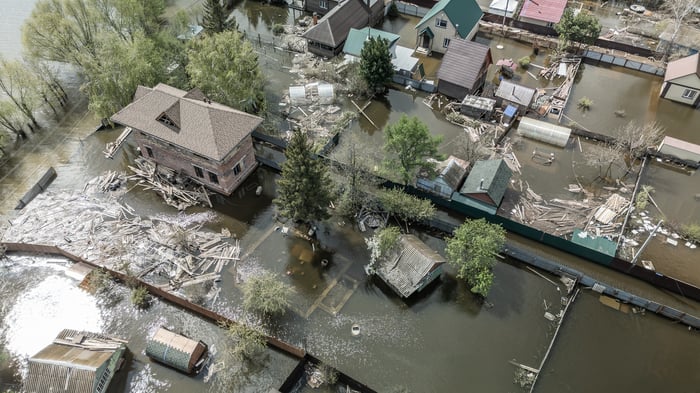
AquaAction water innovators are working to better anticipate flood risks, respond proactively, and protect communities most exposed to water surges.
The hardest hit are often rural, northern, and Indigenous communities and the ones who are least equipped. In Canada, approximately 1.5 million homes are highly exposed to flooding, with 80% of Canadian cities built on floodplains.
From prediction to detection to protection, flooding requires both long-term planning and the real-time local action AquaAction innovators offer.
Prediction: Seeing Risk Before it Arrives
There is a big difference between short-term forecasting, which includes local warnings, emergency coordination, and short-term response planning, and long-term prediction, which uses historical data, flood records, and modeling to understand where risk is building over time.
Forecasting helps us respond. Prediction helps us prepare.
Today, forecasting is becoming more complex. Historical records still matter, but climate change layers on a new unpredictable element. As Professor Alain Pietroniro, Schulich School of Engineering, University of Calgary, and one of Canada's foremost experts on hydrometric data explains:
“It would be great if we could say in November that it’s going to flood in Calgary in May, but you can’t. It’s just not possible. All you can do is plan for it and that’s where the longer-term models come into play.”
Taking Flood Prediction to a Continental Scale
Pietroniro believes that Canada has the expertise to become a world leader in water technology. What the country lacks is a unified flood prediction platform that innovators can build on, similar to the National Water Model in the United States.
Better predictive capacity also creates space for stronger private-sector tools. Flood maps in Canada are often produced by engineering consultants, and improved prediction models can strengthen that work directly.
Open-source tools, satellite data, cloud-based platforms, and near-real-time hydrology products could all help translate research into practical planning.
In his view, progress depends on a better integration between governments and private innovators.
Detection: Knowing What is Happening in Real Time
The Gap in Local Flood Response
Municipalities are still responding too late, often once water levels are already rising. As Eric Bourbeau, CEO and co-founder of X-TELIA, says:
“A lot of them are still very much in reactive mode… They don’t have early warning systems. They don’t have real-time data basically telling them what’s happened.”
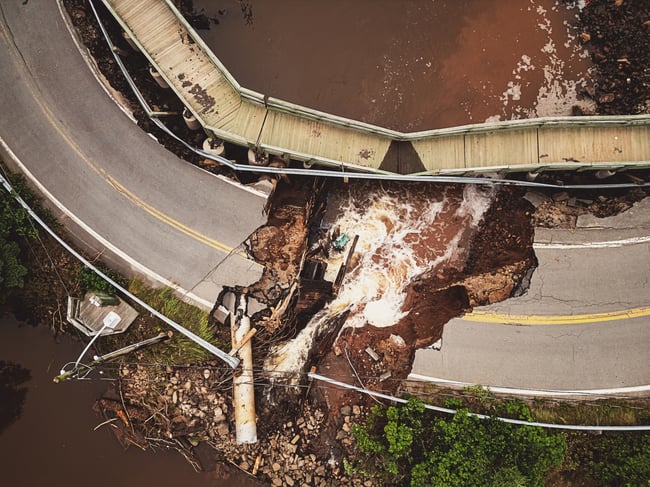
Flooding may be shaped by large watersheds, but it often becomes dangerous at a very small scale. A municipality may be watching a river system while the real threat is forming at one bridge, one culvert, one manhole, or one street. For example, ice build-up at a bridge can send water into nearby homes within an hour, even when the rest of the river appears manageable.
What Real-Time Detection Looks Like
X-TELIA’s work focuses on that gap. Its X-RAIN system uses rain gauges to provide hyper-local rainfall data, helping municipalities see what broader regional stations can miss. Alerts can show, for example, how many millimeters of rain fell in the last 15 minutes in one very specific location.
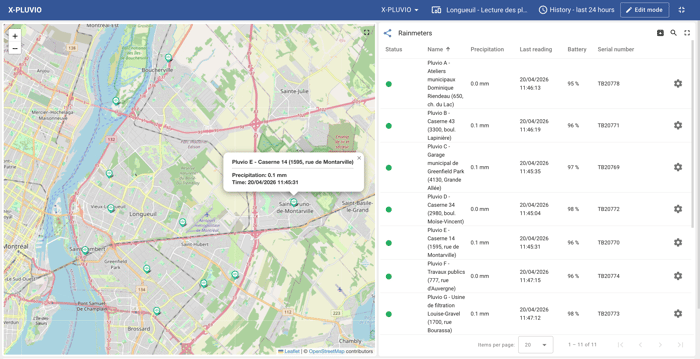
Its X-LEVEL system focuses on rivers. Sensors placed under bridges or in manholes track water levels in real time. During lower-risk periods, readings may come every two hours. During the flood season, that can shift to every minute or two. The sensors are battery powered, long range, and designed to send alerts when conditions are changing quickly.
.png?width=700&height=521&name=NIV-EAU%20(X-LEVEL%20FR).png)
Protection: Damage Control When Water Arrives Downstream
What To Do When Flooding is Already At The Door
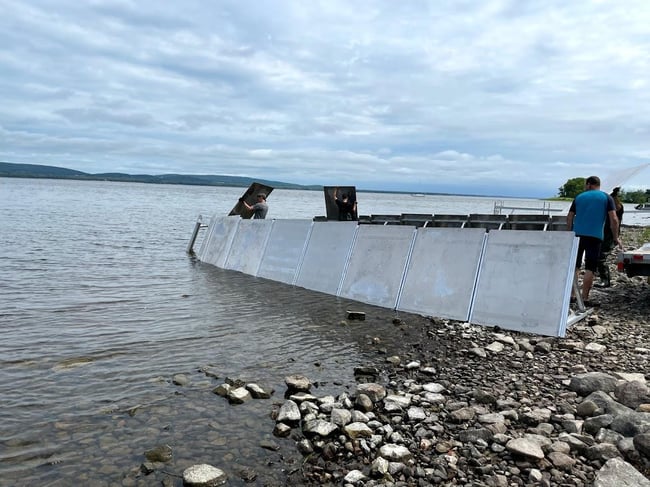
SBB’s answer is a temporary but practical one: modular aluminum flood barriers. Each panel measures one meter by one meter and weighs about 30 kilos, which makes the system lighter and faster to deploy than many traditional emergency measures. It can be stored in a 20-foot container, installed manually, and reused.
These barriers are designed to hold back water, but also to withstand currents and debris, which is critical in real flood conditions where water often arrives with force.
In practice, that kind of protection can buy time. Speaking about a flood-prone community in northern Quebec, Carlos Ballesteros said:
“It gave them time to think of something more permanent if needed because, in the end, the barriers were designed to be a temporary and reusable system. ”
To help communities better anticipate floods and rising water levels, JFSA Québec has developed a hydrological forecasting tool. This tool converts hydrological data into clear, actionable, and useful information for risk planning and management. It provides forecasts, up to five days in advance, for flow rates and water levels, on a continuous basis throughout the year.
Municipalities can thus shift from a reactive stance to a proactive approach. They can better prepare, mobilize the right resources at the right time, and implement preventive measures to reduce property damage.
“Together, let’s shift from reaction to prevention, and transform anticipation into a real force for action.”
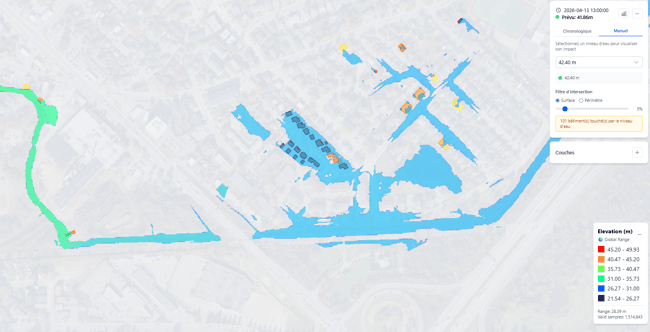
Geosapiens develops climate risk models that assess exposure to flood and wildfire risks at the property level. These models enable decision‑makers to better understand climate-related risks, anticipate their impacts, and implement effective mitigation measures.
The company delivers its modeling data through technology‑driven solutions that provide fast, intuitive, and actionable access to risk insights. These solutions support insurers, government agencies, and financial institutions in strengthening their resilience and reducing losses associated with climate‑driven disasters. CEO Hachem Agili says:
“Our mission at Geosapiens is to transform climate science into practical, actionable tools. By making risks measurable at the local level, we empower organizations to make better decisions and proactively reduce their exposure.”
A More Resilient Path Forward
Flood resilience depends on three pillars. Prediction helps identify where risk is building. Detection helps communities respond in real time. Protection helps reduce damage when water has already reached homes and communities. Stronger flood resilience will depend on all three working together.
As flood risk grows across Canada, AquaAction’s innovators offer a range of tools to help shift from reactive to proactive approach to flood management.
Want to learn more? Watch our full discussion here!