AquaAction’s Water Literacy Project launched in a setting that matched its purpose.
Upstairs, students explored a giant floor map, tracing water systems through movement and play.
As their stomping feet thundered from above, the initiative was officially introduced downstairs.
The hands-on activities above reflected the goals of the initiative: to engage educators and students, and help learners, K-12 understand how water moves through their communities, why it matters and how the daily choices they make can help build a more sustainable future.
Why It Matters
Across Canada, water faces growing pressures. Climate change, human activity, and rising demand are affecting water quality and availability.
Many Canadians also lack a basic understanding of water issues, limiting opportunities for innovation and problem solving in the water sector.
The Water Literacy Project aims to change that.
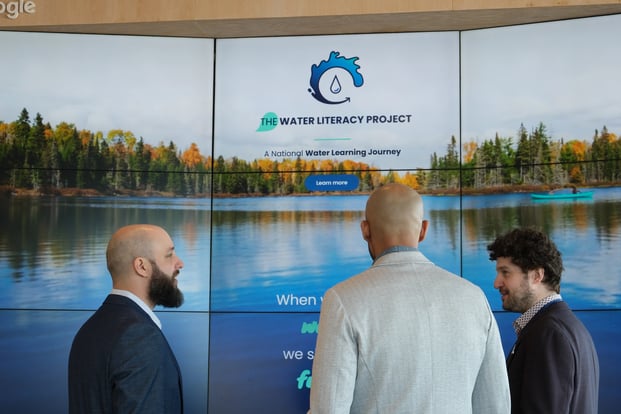
Through hands on, action-oriented learning, students will have the opportunity to explore freshwater systems, develop problem solving skills, and connect to Canada’s water future in meaningful ways.
Lifeblood of the Land
Upstairs at the launch, students traced rivers on a giant floor map and explored water systems through play.
The map, named Freshwater: Lifeblood of the Land, paints a vast portrait of the vessels that feed our nation.
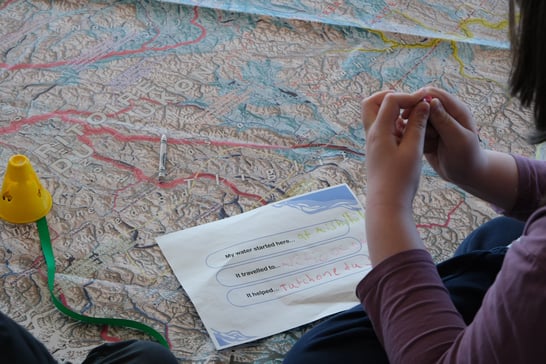
Created in collaboration with the Royal Canadian Geographical Society, the interactive floor map is one of many learning tools featured in the Water Literacy Project.
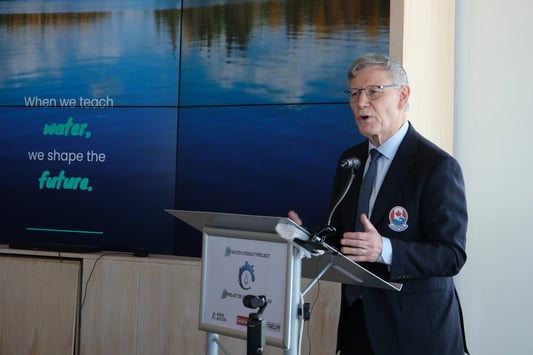
As the Honourable Terry Duguid explained in his address at the official launch at Canadian Geographic Headquarters:
“The program that we're talking about today will reach students across the country, helping them learn about the gift they have inherited and the responsibility that comes with it. Combining science, education, and innovation, and building a shared understanding of water across the country so that Canadians not only appreciate water but protect it.”
One Platform for All
Designed for educators, students and general audiences, Water Literacy is offered through an online platform.
The portal contains tools for all sort of learning styles, taking the form of hands on “Action Packs” and virtual workshops led by experts from the Canadian Museum of Nature.
The platform also weaves in Indigenous perspectives and teachings about water, while using engaging, gamified features such as digital badges to recognize learning and achievement.
Additional organizations are joining the partnership, including ClearWater Futures Foundation, founding creators of Future Chicken! Adding hopeful learning and extra impact through screen-based, multi-platform media.
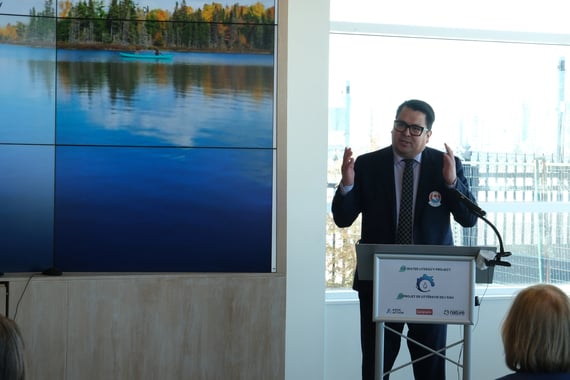
Wade Grant, Parliamentary Secretary for Environment and Climate Change Canada, and Parks, emphasized the importance of the present, not just the future.
“We all say that children are our future. I always say they're our present. We can learn a lot from our children and giving them the tools they need will help them become stronger leaders in this area and in all areas.”
The Water Journey
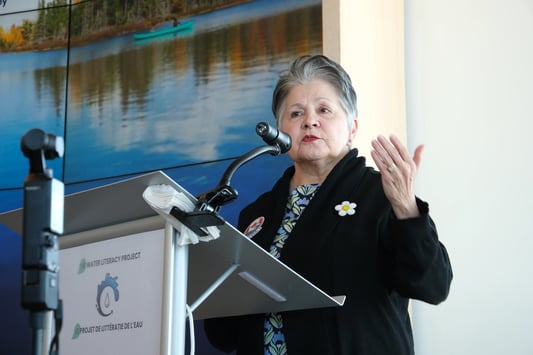
“When we teach water, we shape the future, and without water, there'd be no life”.
Water is more than a lesson. It is a connection that flows through communities, linking people, land, and time.
Elder, Kitigan Zibi Anishinabeg First Nation, Claudette Commanda’s words ground this work in something deeper. Water is a relationship that calls for understanding, respect, and care. That journey begins with curiosity and grows through shared knowledge.
Through the Water Literacy Project, students are not just learning about water. They are becoming part of its story.
Generations to Come
The Water Literacy Project shows that learning about water is about more than science.
It is about connection, responsibility, and action.
It begins with students and grows into a shared understanding that will help protect Canada’s most precious resource for generations to come.
Check out the official Water Literacy Project website to learn more and test your knowledge!